
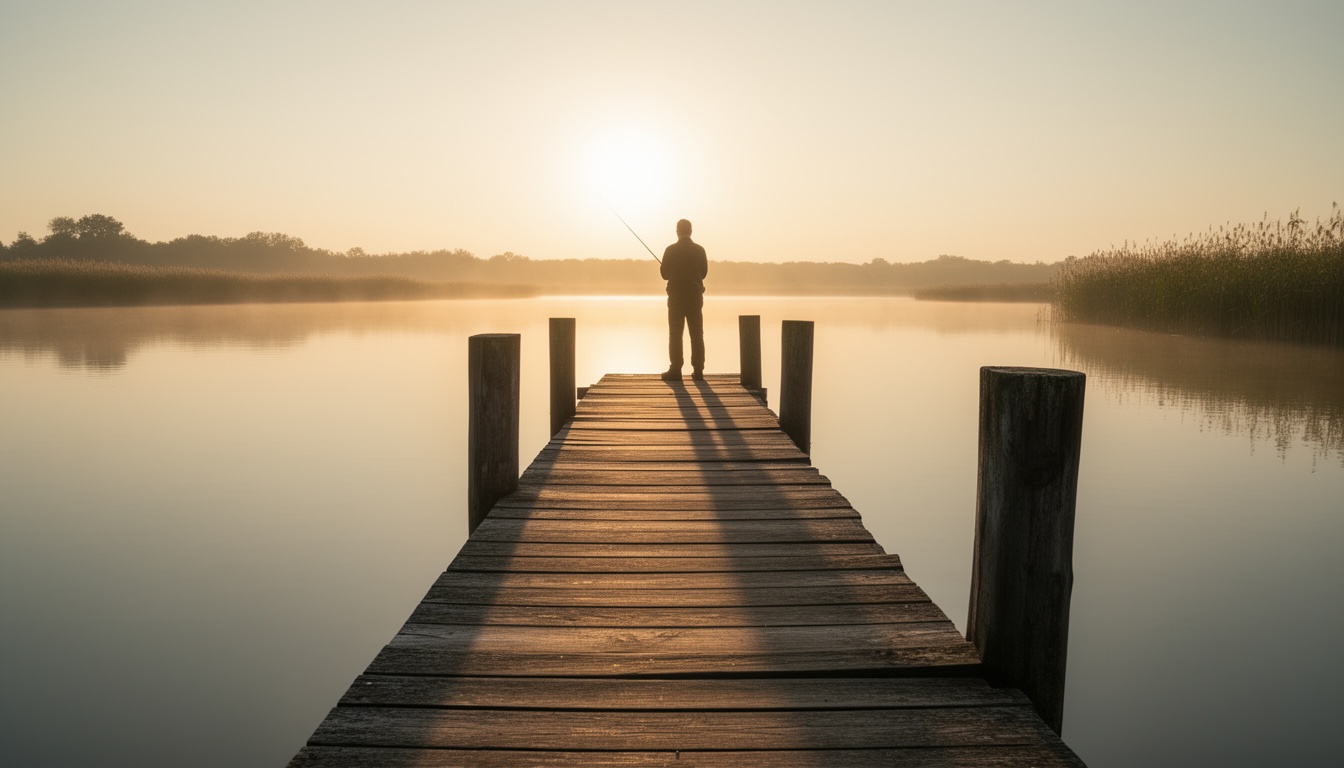
You’ve got a rod, a lake, and a dock — and that’s the whole setup. That’s actually everything you need to start catching fish. The catch is that it only works if you know what a dock is really doing for you. Most beginners cast at the water in front of them and wonder why nothing’s biting. The problem isn’t the water. It’s that they haven’t fished the structure yet.
A dock is one of the most productive pieces of structure on a lake, and it’s the easiest one to learn on. This guide walks through the four spots on any dock that do most of the work, the one rig that works for nearly every species a beginner will target, and the three retrieval patterns that cover 90% of dock fishing.
Why Docks Hold Fish
Here’s the mental model that makes dock fishing click, and it’s the same one experienced anglers use on any body of water: structure equals fish. A dock gives fish three things they want — shade, cover, and food.
- Shade. Water under dock structure typically runs 3–5°F cooler than exposed shallows. In summer heat, fish often move into that cool water and stay put.
- Cover. Pilings, brackets, and the underside of the deck give fish a place to hide from predators and from you.
- Food. Pilings accumulate algae, barnacles, and small crustaceans. That growth supports baitfish, and baitfish attract the bigger fish you’re after. Older, “ugly” docks with heavy growth on the pilings often out-produce brand-new ones.
There’s a second, less obvious bonus: foot traffic. People who use docks tend to drop bait, bread, and scraps, and the small fish that gather to eat them become bait for bass and crappie. So a dock that sees regular use is often a dock that bites.
The Four Spots to Fish on Any Dock
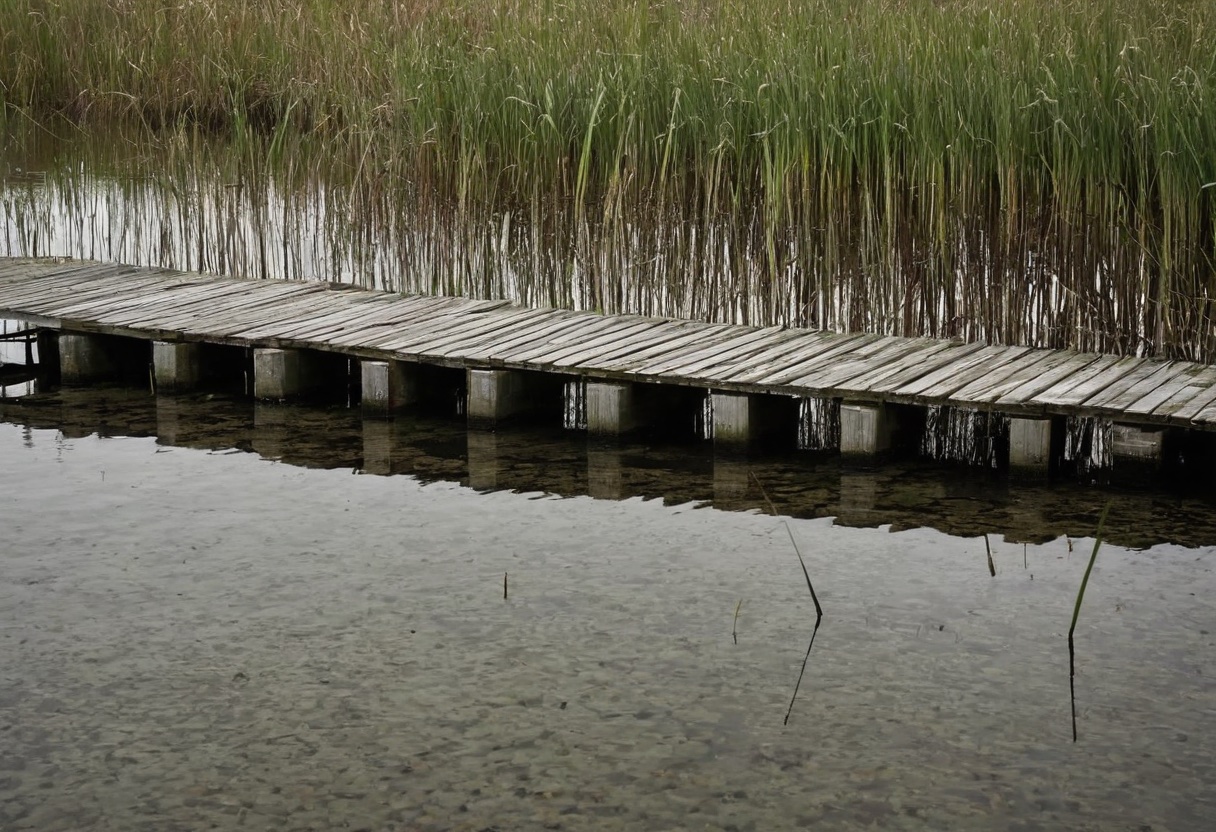
Most beginners pick one piling and stay there all day. That’s the first thing to change. A dock is a system of four zones, and each one works differently.
1. The pilings. Where current or wind-driven water hits a piling, velocity drops on the downstream side. Bait drifting in the current stops there, and predators typically position on that side to ambush it. If there’s no current, fish the shaded side of the piling.
2. The shore junction. Where the dock meets the land is often the highest-percentage spot on the whole structure. Predators trap bait against the dock where there are the fewest escape routes. Fish the first two or three feet of water where the dock meets the bank.
3. The far-edge drop-off. Every dock has a point where the shallow water ends and the deeper water begins, usually a few feet past the last piling. That break is a holding point for larger fish. Cast just past the end of the dock and work your bait back along that line.
4. Under the deck. The biggest fish sometimes hold way under the dock, not at the edges. If you’re casting from the edge, your bait may never reach them. That’s okay for a first session — just know the zone exists.
One more read: if you see baitfish showering near the dock, cast to the structure, not to the splash. The predator is waiting under the cover.
The One Setup to Start With: The Bobber Rig
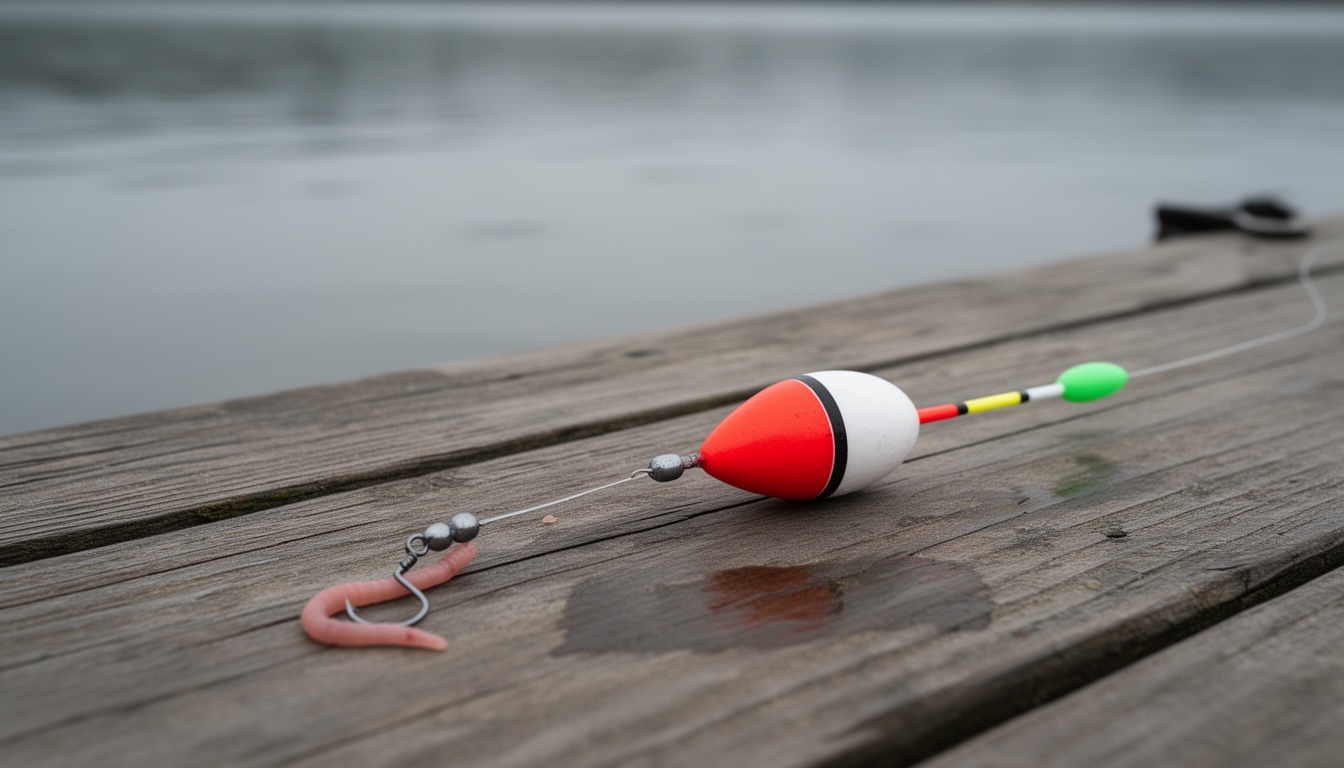
If you’re going to learn one rig for dock fishing, make it the bobber rig. It’s the “gateway setup” for a reason: it’s cheap, it’s visible, it works for bluegill, crappie, bass, and perch, and it teaches you how to read a bite.
The build is simple:
- A fixed float (the red-and-white type that clips on) for water shallower than about 5 feet.
- A split-shot sinker 8–12 inches above the hook.
- A size 6–10 hook with a small nightcrawler, wax worm, or cricket.
Drop the rig and let it sink until the bait hangs about 6 inches to 1 foot off the bottom. Then stop moving and wait. In a good spot, bluegill often hit within 2–3 minutes.
If your water is deeper than about 5 feet, switch to a slip float so you can set depth without changing your whole rig. The full setup is covered step-by-step in our bobber fishing guide for beginners.
Gear That Actually Works from a Dock
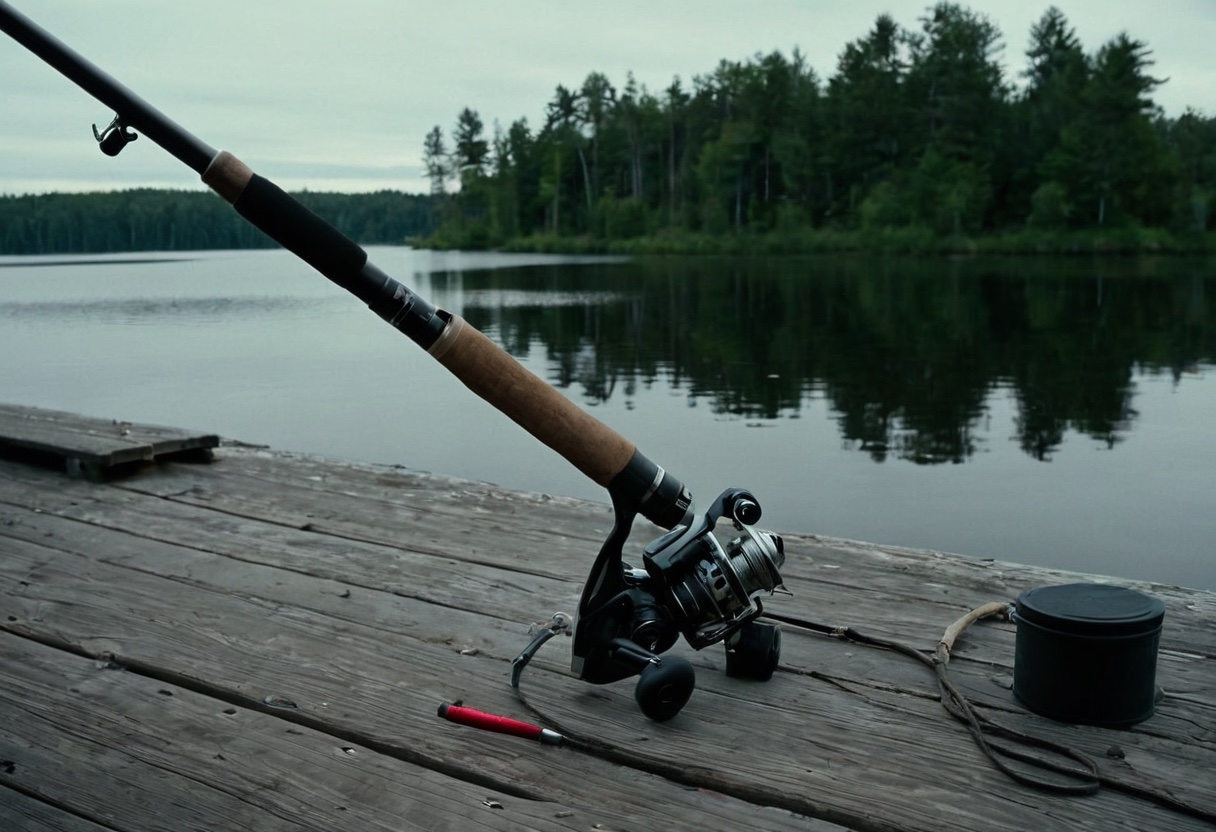
You don’t need much gear to fish a dock. The most common gear mistake is bringing too much of the wrong kind.
What works:
- A light-to-medium spinning rod, 7–9 feet.
- A compact spinning reel loaded with 4–8 lb test monofilament (or braid with a light fluoro leader).
- That’s it. Add a 1/8-ounce jig or a couple of small spinners if you want to cover water with a lure.
What to leave in the truck: heavy rods, big reels, 15 lb line, and any lure bigger than a finger. Heavier gear doesn’t make you stronger — it makes your presentation worse. From a dock you’re not casting far, so you don’t need power. You need sensitivity and a gentle presentation, and light gear gives you both.
If you’re still deciding on a rod and reel pair, our guide on freshwater rod and reel combos for beginners covers what to look for without spending a lot.
Retrieval: The Three Patterns That Cover Dock Fishing
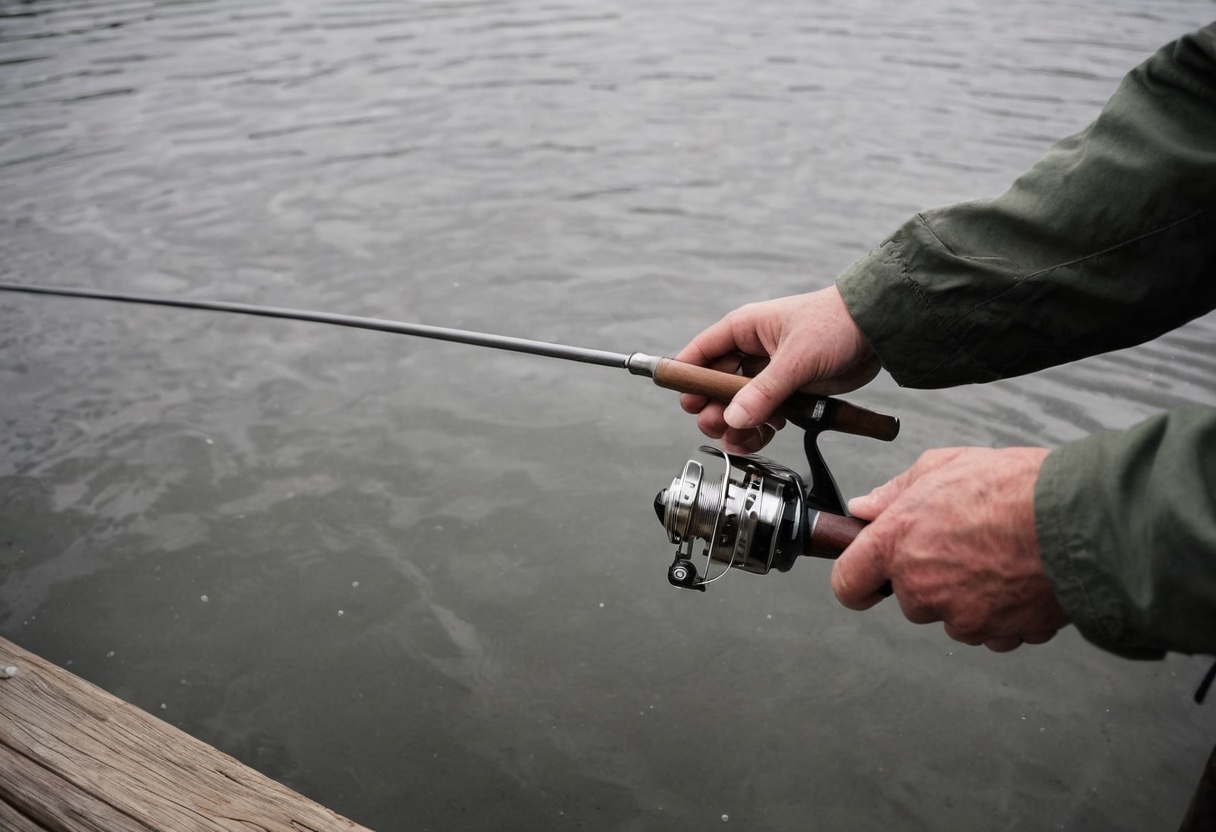
With the rig tied on, you really have three patterns to work. Learn them and you can fish any dock, in any season.
Pattern 1: Sink-and-hold. Drop the rig, set your depth, and let it sit. This is the pattern for panfish and for bass holding tight to structure. The key is patience — give it 2–3 minutes before moving. If you get nibbles but no hookups, raise the bobber a few inches and try again. Depth is the #1 adjustable in float fishing, not the bait.
Pattern 2: Cast-and-retrieve. Cast a small spinner, spoon, or jig out past the dock’s edge and retrieve it at a steady pace. Vary the speed — it changes the lure’s vibration, flash, and depth, and that’s how you find what’s working. This pattern is for covering the drop-off and the open water near the dock.
Pattern 3: Twitch-and-pause. Work a soft plastic or small jig along the pilings with short twitches, then let it drop. This mimics an injured baitfish hugging cover. It’s the best pattern for bass that are holding tight and not willing to chase.
The classic beginner mistake here: hanging a spinner or spoon under a float and letting it sit. Those lures are designed to move. If you’re not retrieving, you’re not using the lure — you’re using a very expensive bobber.
What You’ll Catch, and When Docks Bite Best
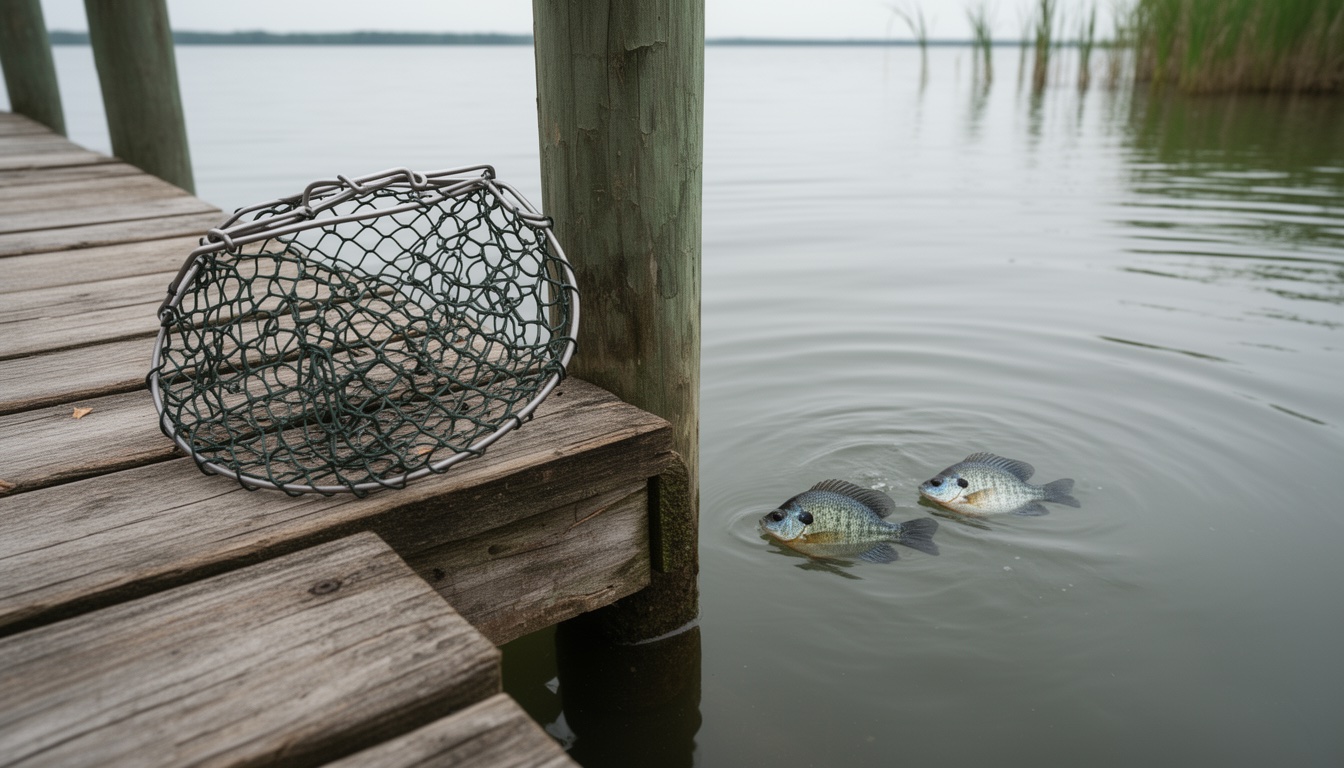
A beginner fishing a dock will typically meet these species:
- Largemouth bass. The classic dock predator in summer. They use overhead cover like docks to ambush bait, and they’re often most active in low light — early morning, late evening, and at night. Night can be the single most productive time, especially in summer.
- Bluegill and other panfish. The fastest way to learn to read a bite. A small worm under a float in a good spot typically produces strikes within minutes.
- Crappie. They often suspend 2–4 feet below the surface over deeper water, tight to structure. A slip float with a small jig or minnow is the standard pattern.
- Perch. Another bobber-rig species that shows up at docks, often in numbers.
- Catfish. If your dock is on deeper water, a piece of cut bait on the bottom near a piling will usually find a catfish eventually.
Two timing notes that matter. First, in summer the dock is the pattern — fish seek the cooler, shaded water, so your best hours are dawn, dusk, and the night. Second, in cold months fish tend to tuck tighter into cover and feed slower, so slow every presentation down and get your bait closer to the structure.
One seasonal caution: bass typically begin heavy feeding and move into shallow water to nest when water hits around 60°F, and some states close spawning waters during that window. Check your local regulations before you cast in spring.
Beginner Mistakes That Cost You Fish
- Fishing one piling and calling it a day. Move along the dock. Work the pilings, the shore junction, and the drop-off.
- Heavy gear. It kills your casting range and your presentation. Light and simple wins.
- Lures left motionless under a float. Retrieve them, or don’t use them.
- Wrong depth. If the bobber’s dragging, you’re too deep. If you get nibbles but no hookups, raise it a few inches. Adjust the stop, not the rig.
- Ignoring the time of day. Docks shine in low light and summer heat. Go at dawn or after sunset.
- Not checking the rules. Licensing, creels, size limits, and spawning closures vary by state.
- Leaving hooks in a private dock. If you snag, make every effort to retrieve the hook — it’s someone’s property, and it’s bad news for the next angler.
Before You Cast: Rules and Etiquette
Dock fishing is a privilege on private land in most cases, so a few habits go a long way.
- Ask permission before you use a private dock. A quick “mind if I fish off your dock?” gets you more access than you’d think.
- Check your state’s licensing and any special dock or spawning-season rules.
- Leave the dock clean — trash, bait scraps, and lost gear make the next angler’s day worse and can close off access for everyone.
- Handle fish gently. Wet your hands, keep fish in the water as long as possible, and release what you can. Our guide to handling and unhooking fish safely covers the basics without overthinking it.
A dock is the closest thing fishing has to a cheat code for beginners, and that’s not an exaggeration. The structure is already doing the work of concentrating fish — your job is just to put the right bait in the right one of four spots, at the right depth, at the right time of day. Start with a bobber rig and a light spinner, work all four zones, and you’ll be surprised how quickly the “nothing’s biting” feeling disappears.